
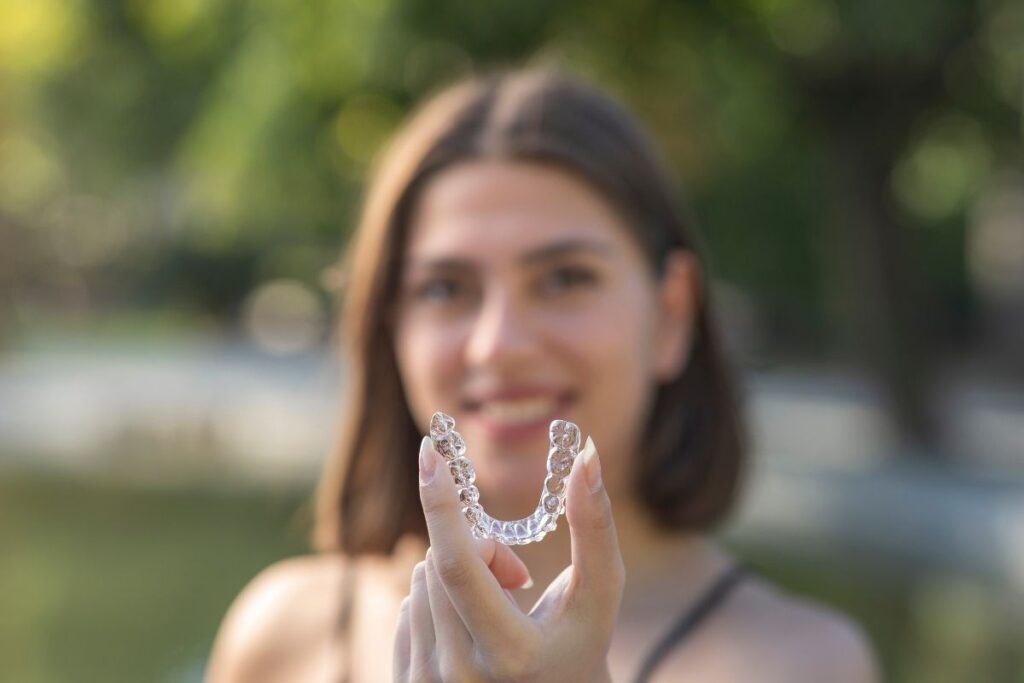
Yes, Invisalign can close many types of gaps between teeth. Clear aligners gradually move teeth into better positions, reducing spaces and creating a more even appearance. However, the right approach depends on why the gap developed, how large it is, and the condition of your teeth and gums.
What Causes Gaps Between Teeth?
A gap between two teeth is called a diastema. While gaps can occur anywhere in the mouth, they commonly appear between the two upper front teeth.
Several factors can contribute to gaps, including:
- Natural tooth size and jaw development
• Missing teeth
• Teeth that are smaller than expected
• Tongue thrusting or certain oral habits
• Gum disease that affects the supporting tissues
• A thick frenum, the tissue connecting the upper lip to the gums
Identifying the cause matters because simply moving the teeth may not address the underlying issue.
How Does Invisalign Close Gaps?
Clear aligners apply controlled pressure to specific teeth. As you wear each set according to your treatment plan, the aligners gradually guide the teeth toward their planned positions.
For some patients, closing a gap may involve moving neighboring teeth closer together. In other cases, your dentist may need to create space in certain areas before bringing teeth into alignment.
Your treatment plan may also include attachments, which are small tooth colored shapes placed on selected teeth. They give the aligners additional grip and help produce more precise movements.
If you are considering clear aligners, learning how Invisalign treatment works can help you understand what the process may involve.
How Long Does It Take to Close a Gap?
Treatment time varies from person to person. Small spaces may respond relatively quickly, while larger or more complex gaps can require more time.
Your dentist will evaluate your bite, tooth positions, gum health, and the size of the space before estimating how long treatment may take. Wearing your aligners as instructed also plays an important role in staying on track.
Can Invisalign Close a Large Gap?
In some cases, yes. However, Invisalign may not be the only treatment needed for a larger space. The cause of the gap can affect the recommended approach.
For example, if a gap relates to a missing tooth, gum disease, or the position of the frenum, your dentist may recommend addressing that concern before or alongside orthodontic treatment.
A dental evaluation can determine whether clear aligners are appropriate for your specific situation.
Will the Gap Come Back After Treatment?
Teeth can shift after orthodontic treatment, which means retention is important. Your dentist may recommend wearing a retainer to help keep your teeth in their new positions.
Following your retainer instructions can reduce the chance of the space reopening over time.
Ready to Take the Next Step?
If you are wondering whether clear aligners can close your gap, a professional evaluation can give you a clearer answer. At Eldorado Orthodontics in McKinney, you can discuss your concerns, treatment options, and what may work best for your teeth.
Visit our dental clinic in McKinney to explore your options and take the next step toward a more comfortable, well-aligned bite.
Frequently Asked Questions :
- Can Invisalign close a gap between two front teeth?
Yes. Invisalign can often bring separated front teeth closer together when the gap results from tooth positioning and the teeth and gums are healthy.
- Is Invisalign better than braces for closing gaps?
Both can close gaps effectively. The better option depends on your tooth movement needs, bite, preferences, and overall oral health.
- Can Invisalign fix gaps caused by missing teeth?
Clear aligners can move existing teeth, but they cannot replace a missing tooth. Your dentist may recommend a combination of treatments depending on your situation.
- Do I need a retainer after closing a gap?
Usually, yes. Retainers help maintain the new tooth positions and reduce the risk of the gap returning.