
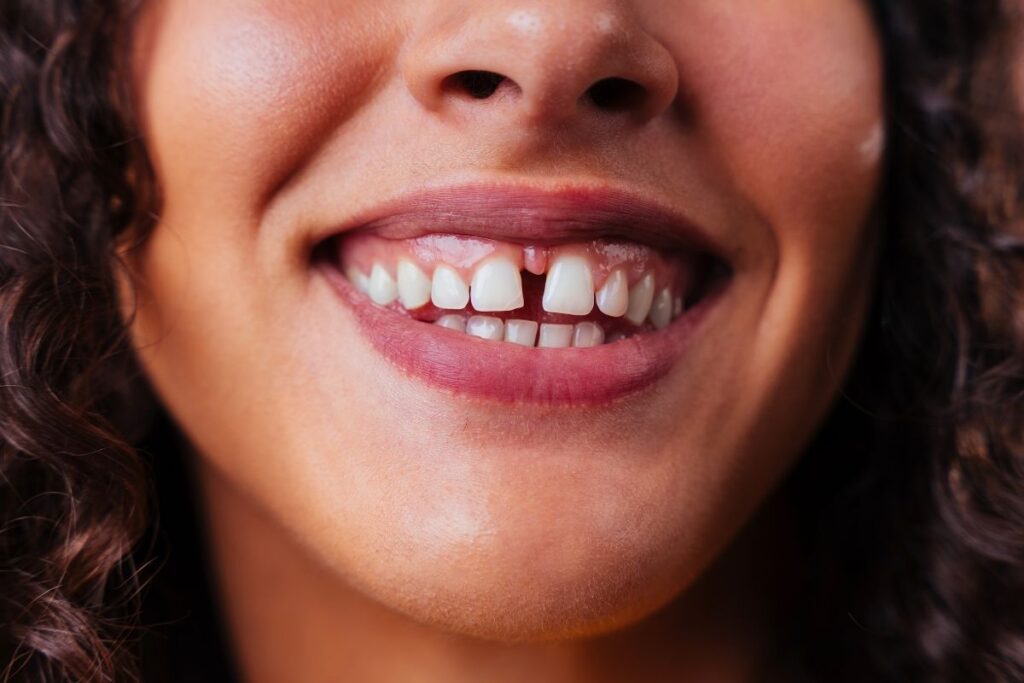
Gaps between teeth can develop for several reasons, from natural tooth size and jaw development to changes in the gums or the way your teeth fit together. A small space may simply be a cosmetic concern, but a new or widening gap can sometimes point to an underlying dental or orthodontic issue. The good news is that many types of spacing can be treated once the cause is identified.
What Is a Gap Between Teeth?
A space between two teeth is commonly called a diastema. It can occur anywhere in the mouth, although people often notice it between the upper front teeth.
Some people have noticeable spacing from childhood, while others develop it later. The size and location of the space can also vary. In some cases, the gap stays the same for years. In others, it gradually becomes more noticeable.
Understanding why the space exists is important because treatment depends on the underlying cause.
What Causes Gaps Between Teeth?
Natural Tooth and Jaw Development
Sometimes the teeth and jaw simply do not match in size. If your teeth are relatively small compared with the available space in your jaw, gaps can appear.
This type of spacing may develop naturally as permanent teeth come in. Children and teenagers may also experience temporary spaces while their teeth and jaws are still developing.
Missing Teeth
A missing tooth can leave extra space in the dental arch. Nearby teeth may gradually shift toward the open area, changing your bite and creating additional spacing.
Replacing the missing tooth and managing the surrounding alignment may help restore a more balanced smile.
An Oversized Frenum
The frenum is a small band of tissue that connects the inside of your upper lip to the gum tissue above your front teeth. In some people, this tissue extends lower than usual and contributes to a space between the front teeth.
An orthodontic evaluation can help determine whether the frenum plays a role in the spacing.
Thumb Sucking or Other Childhood Habits
Certain oral habits can influence how the teeth develop. Persistent thumb sucking, tongue thrusting, or similar behaviors can place pressure on the front teeth and affect their position over time.
Addressing the habit can be an important part of preventing the space from becoming larger.
Gum Disease
New or increasing spaces deserve attention, particularly in adults. Gum disease can damage the tissues and bone that support the teeth. As the supporting structures weaken, teeth may become loose or shift position.
If you notice that a gap has recently appeared or is getting wider, schedule a dental examination rather than assuming it is only a cosmetic issue.
Teeth That Are Smaller Than Expected
Teeth that naturally have a smaller shape can leave extra room in the mouth. Even when the teeth themselves are healthy, the additional space may make the smile appear uneven.
Depending on the amount of spacing, orthodontic treatment or cosmetic dental treatment may help improve the appearance.
Can Gaps Between Teeth Get Bigger?
Yes, they can.
A gap may remain unchanged for years, but spacing can increase when teeth move because of gum problems, tooth loss, oral habits, or changes in the bite.
Pay attention to changes rather than focusing only on how the gap looks. Bleeding gums, swelling, loose teeth, discomfort, or noticeable tooth movement should be evaluated by a dental professional.
How Are Gaps Between Teeth Treated?
There is no single treatment that works for every type of spacing. Your orthodontist will consider the size and location of the gap, your bite, tooth position, jaw development, and overall oral health.
Braces
Braces can gradually move teeth into better positions and close unwanted spaces. They can also address other alignment and bite concerns at the same time.
Traditional braces remain a reliable option for many patients, particularly when several teeth need to move.
Clear Aligners
Clear aligners use a series of removable trays to gradually guide teeth into planned positions. They may be suitable for certain spacing concerns, depending on the complexity of the case.
Because aligners work differently from braces, an orthodontic specialist should determine whether they are appropriate for your specific tooth movement needs.
Dental Bonding
When a small gap results partly from tooth shape or size, dental bonding may improve the appearance by adding tooth colored material to the sides of the teeth.
Bonding does not physically move the teeth, so it may not be the right solution when the spacing results from an alignment or bite problem.
Veneers
Veneers can change the visible shape and proportions of teeth to reduce the appearance of certain spaces. They may be considered when spacing is primarily cosmetic and the teeth are otherwise suitable for this type of treatment.
Treatment for Gum Problems
If gum disease contributes to tooth movement, treating the gum condition comes first. Closing the space without addressing the underlying problem may not provide a stable result.
A dentist can evaluate the gums and supporting structures and recommend appropriate care.
When Should You See an Orthodontist?
Consider an orthodontic evaluation if you have noticeable spacing that concerns you, especially if the gap is changing.
You should also seek an evaluation if you notice:
- A gap that continues to get larger
- Teeth that appear to be shifting
- Difficulty biting or chewing
- Changes in the way your teeth come together
- A missing tooth creating additional spacing
- Crowding in other areas of your mouth
- A child whose teeth are developing with unusual spacing
An evaluation can help distinguish normal spacing from a problem that may benefit from treatment.
Does Closing a Tooth Gap Improve Your Smile?
It can. Closing or reducing unwanted spacing may create a more even appearance and improve overall tooth alignment.
However, treatment should focus on more than appearance. Proper tooth positioning and a balanced bite can help create a result that functions well as well as looks natural.
Can You Prevent Gaps From Developing?
Not every gap can be prevented because genetics, tooth size, and jaw development play important roles. However, maintaining healthy gums, treating missing teeth promptly, and addressing persistent oral habits can reduce some causes of tooth movement and spacing.
Regular dental visits also make it easier to identify changes before they become more significant.
Ready to Understand Your Options?
You do not have to guess whether a gap is simply cosmetic or related to your bite and tooth alignment. A professional evaluation can identify the cause and help you understand which treatment options make sense for your smile.
If you are looking for orthodontic care in McKinney, Eldorado Orthodontics can evaluate your spacing and discuss a personalized treatment approach.
Visit our dental clinic in McKinney. Take the next step toward a more confident, well-aligned smile by scheduling a consultation today.