
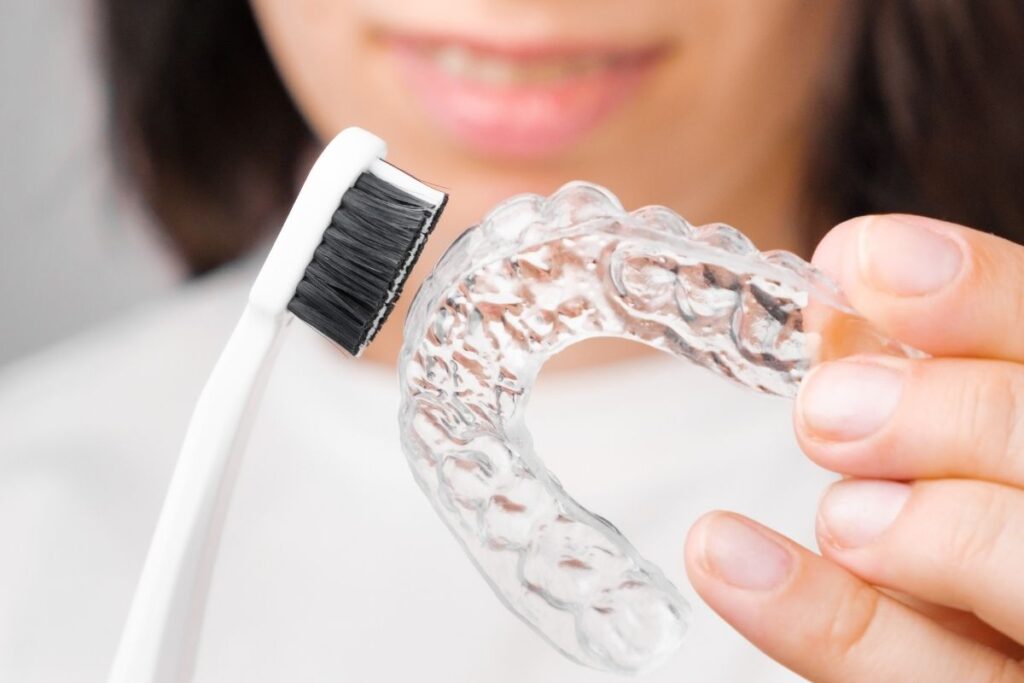
Clean Invisalign aligners every day with lukewarm water, a soft-bristled toothbrush, and a clear, unscented soap or an aligner cleaning product recommended by your orthodontist. Rinse the trays whenever you remove them, gently brush away buildup, and rinse them thoroughly before putting them back in. Avoid hot water, abrasive toothpaste, harsh chemicals, and aggressive scrubbing — they can damage the trays.
Daily Cleaning Routine
A simple, consistent routine keeps aligners clean without scratching or warping them.
| Step | What to Do |
|---|---|
| 1. Rinse | Rinse trays with cool or lukewarm water as soon as you remove them, to wash away saliva and food particles before they dry on the plastic. |
| 2. Brush gently | Use a separate soft-bristled toothbrush to clean both sides. A small amount of clear, unscented soap is fine if suitable for your aligners. Never scrub forcefully. |
| 3. Rinse thoroughly | Rinse off all soap residue before putting the aligners back in your mouth. |
| 4. Store properly | Keep aligners in their protective case whenever they’re out of your mouth — not on countertops, in napkins, or anywhere exposed. |
How often: Clean thoroughly at least twice a day (morning and night), and rinse every time you take the trays out — including after meals, once your teeth are clean.
Suggested Timing
- Morning: Rinse and gently clean aligners before putting them back in.
- After meals: Remove trays before eating; clean your teeth, then rinse the trays before reinserting.
- Night: Brush and floss, then clean aligners before wearing them overnight.
- Anytime they’re out: Store in the case.
Consistency matters more than intensity — regular gentle cleaning beats occasional aggressive cleaning.
Deeper Cleaning: Soaking
Soaking helps when regular rinsing and brushing aren’t enough.
- Cleaning crystals or tablets made for clear aligners/retainers give the best deep clean. Follow the manufacturer’s instructions for water temperature, amount, and soak time — don’t exceed the recommended duration.
- Hydrogen peroxide or vinegar: Only use these homemade solutions if your orthodontist or the aligner manufacturer specifically approves them. Aligner materials vary, so a purpose-made cleaning product is generally the safer choice.
Removing Stains and Buildup
Plaque, saliva, food particles, and mineral deposits can leave aligners looking cloudy or stained.
- Start gently — rinse and brush both sides with a soft-bristled toothbrush.
- If buildup remains, use an aligner cleaning product as directed.
- Don’t scrub harder to remove stubborn deposits — aggressive brushing scratches the plastic and can make cloudiness worse.
- If staining or cloudiness persists despite proper care, check with your orthodontist before trying stronger products.
What to Avoid
| Avoid | Why |
|---|---|
| Hot or boiling water | Can distort the plastic and affect fit |
| Regular toothpaste | Abrasive ingredients scratch the plastic, causing cloudiness |
| Colored or scented soap | Dyes and fragrances can leave residue, color, or bad taste |
| Colored mouthwash | Dyes can discolor clear plastic; some ingredients aren’t aligner-safe |
| Bleach or harsh chemicals | Stronger isn’t safer — can damage the trays |
| Rough scrubbing | Removes buildup but scratches the plastic |
Eating and Drinking With Invisalign
- Remove aligners before eating or drinking anything except water — trapped food and beverages increase decay risk and can stain the trays.
- Sugary, acidic, or colored drinks pose the highest risk while trays are out.
- Always clean your teeth before putting the aligners back in after eating.
Preventing Odor
Odor develops when bacteria, plaque, saliva, or food particles build up on the trays. To prevent it:
- Rinse trays every time you remove them.
- Clean them thoroughly every day.
- Brush and floss regularly.
- Clean your teeth before replacing trays after meals.
- Store trays in their case when not worn.
If odor persists despite regular cleaning, contact your orthodontist.
Cloudy, Cracked, or Warped Aligners
Cloudiness usually comes from plaque, mineral deposits, or scratches — start with your normal gentle cleaning routine before trying anything stronger.
Cracks or warping are different: never try to reshape or repair a damaged aligner yourself. Contact your orthodontist if an aligner cracks, develops a sharp edge, changes shape, or stops fitting properly.
When to Contact Your Orthodontist
- A cracked or warped aligner
- A sharp edge irritating your mouth
- A tray that no longer fits correctly
- Persistent odor after regular cleaning
- Heavy buildup that doesn’t improve
- Staining or cloudiness that continues despite proper care
Don’t try to fix these issues yourself — your orthodontist can recommend the right next step.
Keep Your Aligners Clean Throughout Treatment
For patients considering Invisalign treatment, proper aligner care helps keep trays clear, comfortable, and hygienic throughout treatment.
Visit our dental clinic in McKinney. Eldorado Orthodontics provides McKinney patients with personalized orthodontic care and practical guidance for maintaining their aligners throughout treatment.
FAQs :
1. How often should I clean Invisalign?
Every day — rinse whenever you remove the trays, and clean thoroughly at least twice daily.
2. Can I clean Invisalign with toothpaste?
Better to avoid it. Abrasive ingredients can scratch the plastic and make trays look cloudy.
3. Can I use hot water to clean Invisalign?
No — use cool or lukewarm water. Hot water can distort the plastic and affect the fit.
4. Can I soak Invisalign in hydrogen peroxide?
Only if your orthodontist or the manufacturer approves it for your specific trays. An aligner-specific cleaning product is the safer general choice.
5. How do I remove buildup from Invisalign?
Start with lukewarm water and gentle brushing; if buildup remains, use an aligner cleaning product per its instructions.
6. Why does my Invisalign smell?
Bacteria, plaque, saliva, or food particles may be building up on the trays. Regular cleaning and good oral hygiene help prevent it.