
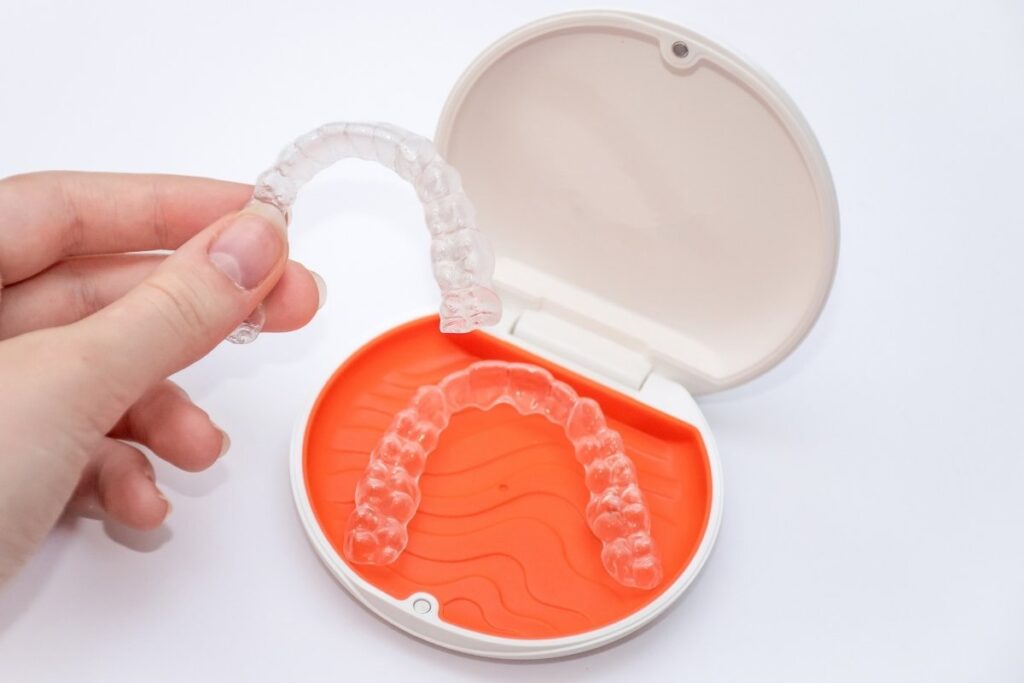
Your last aligner isn’t the finish line. At your final visit, your orthodontist removes the small attachments from your teeth, checks your bite, and hands you retainers. You wear those retainers full time for the first few months, then at night for as long as you want your teeth to stay put. That routine is what turns a straight smile into a lasting one. Here’s what to expect, from the final appointment to the years that follow.
What happens on the day you finish your last aligner?
Most final appointments feel quick and a little anticlimactic. Your orthodontist polishes off the tooth colored attachments that helped your aligners grip and move your teeth. It usually takes a few minutes, and most people feel little or no discomfort. Your teeth may feel smoother, and your bite may feel slightly different for a few days. That’s normal.
Next, your team takes a digital scan or impressions to make your retainers. Some offices hand them over the same day. Others order them, which can take a week or two. If you have to wait, keep wearing your last set of aligners until your retainers arrive. Teeth can start drifting within days, so don’t leave a gap in your routine.
Do you really need a retainer, and how long do you wear it?
Yes, and this is the part patients most often underestimate. Your teeth sit in bone and gum tissue that need time to firm up around their new positions. Until that happens, they want to move back toward where they started.
A typical schedule looks like this:
Months 1 to 6: Wear your retainers about 22 hours a day, and take them out only to eat, drink anything besides water, and brush.
After that: Switch to nights only, and keep doing it. Nighttime retainer wear has no expiration date. Teeth shift naturally throughout life from chewing, clenching, and aging, and a retainer is the simplest way to stop that.
Your orthodontist may adjust this schedule based on your teeth and your history, so follow their plan over any general rule. Retainers come in a few styles:
- Clear removable retainers, which look like thin aligners
- Hawley retainers, made with a wire across the front and an acrylic base
- Fixed retainers, a thin wire bonded behind your front teeth that you can’t take out
Some patients use a fixed retainer on the bottom and a removable one on top. Ask which setup fits your bite and your habits.
What happens if you skip your retainer? Will your teeth move back?
They can, and often faster than people expect. Relapse usually starts quietly. Your retainer feels tight when you put it in. Your lower front teeth look a little crowded. A small gap reopens.
If your retainer feels snug after a few missed nights, wear it more consistently and let your orthodontist know. If it doesn’t fit at all, don’t force it into place. Pushing a retainer over shifted teeth can cause pain and may not fix anything. Call your office instead.
Lost or cracked your retainer? Call within the week. A replacement costs far less than redoing treatment, and the sooner you get one, the less your teeth move in the meantime.
Can you fix small changes after treatment ends?
Often, yes. Some patients get a short set of refinement aligners near the end of treatment to fine-tune a tooth that didn’t land perfectly. Others come back months or years later after mild shifting, and a brief round of new aligners can usually bring things back into line. The earlier you catch a shift, the simpler the fix.
If you’re in McKinney and you’re curious how Invisalign aligner treatment would work for your own teeth, a consultation will show you the full plan, retention included, before you commit to anything.
How do you care for your retainers and your new smile?
A few habits go a long way:
- Clean your retainers daily with a soft toothbrush, cool water, and a mild soap or retainer cleaner. Hot water can warp them, so skip the dishwasher and the microwave too.
- Keep them in their case whenever they’re out of your mouth. Wrapped in a napkin on a lunch tray is how most retainers end up in the trash.
- Ask before you whiten. Teeth that wore attachments can look slightly different in shade, and your dentist can help you plan whitening so the result looks even.
- Keep your regular cleanings. Healthy gums hold your results in place, and your dentist can spot a retainer problem early.
- Bring your retainers to checkups, so your team can inspect the fit.
When do your results feel truly settled?
Your teeth look finished the day your aligners come off, but the bone and gum tissue around them need roughly six to twelve months to stabilize. The first year is the most critical for consistent retainer wear. After that, nightly wear keeps everything where it belongs.
Keep That Smile Exactly Where You Left It
Whether you just finished treatment or you’re still deciding if aligners fit your life, we’ll help you protect the results you want to keep. Visit our dental clinic. The team at Eldorado Orthodontics in McKinney will check your retainers, answer your questions, and build a plan that keeps your smile steady for years. Call us or book online today.
FAQs :
1. Can I stop wearing my retainer after a year?
Not safely. Teeth keep shifting for life, so most orthodontists recommend nighttime wear indefinitely.
2. Can I use my old aligners as a retainer?
Only as a short-term backup, and only if your orthodontist approves. Aligners wear out quickly and weren’t designed to hold teeth in place for the long haul.
3. Is it normal for my teeth to feel sore after my last aligner?
Mild tenderness for a few days is common, especially when you start your retainers. Pain that lingers or gets worse deserves a call to your office.
4. What if my retainer stops fitting?
Don’t force it. Call your orthodontist, who can tell you whether you need a replacement or a quick round of corrective aligners.