
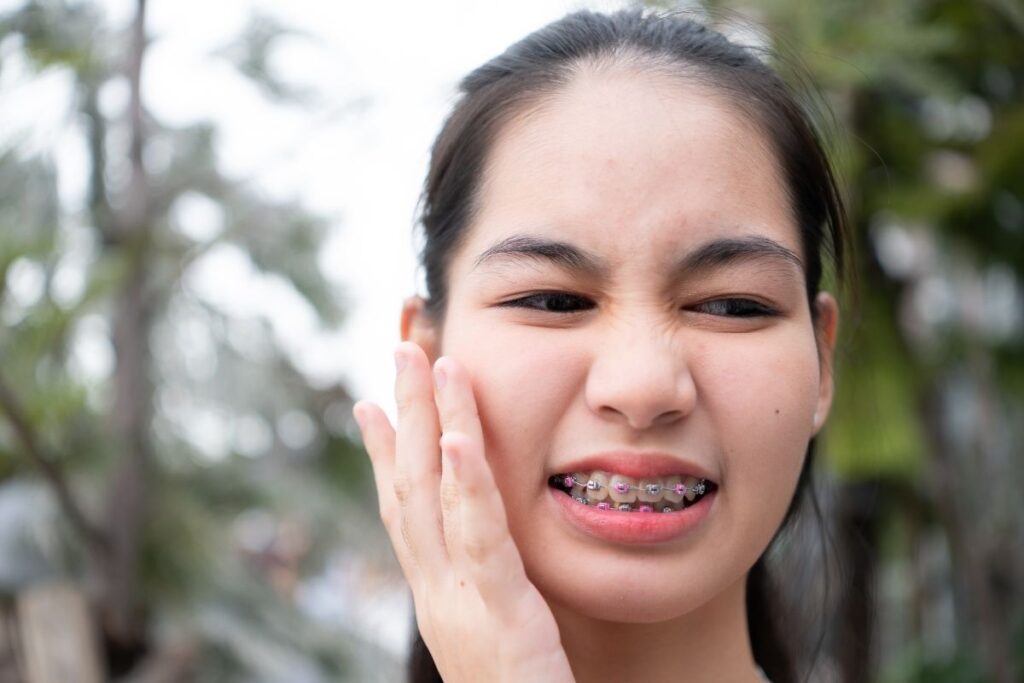
Sore, scraped cheeks are the most common complaint after braces go on, and the fix usually takes about 30 seconds. Here is how to stop braces from cutting your cheeks: dry the sharp bracket or wire, press a small ball of orthodontic wax over it, and rinse with warm salt water a few times a day. That combination shields the raw spot while your mouth toughens up. If a wire pokes out or a bracket comes loose, call your orthodontist instead of waiting it out. Brace wearers in McKinney ask us about this constantly, so here is the full playbook, from quick relief to knowing when a sore needs a professional’s eyes.
Why do braces cut the inside of your cheeks?
The lining of your cheeks is soft, and it has never dealt with hardware before. Brackets have edges, wires have ends, and your cheeks press against all of it when you talk, chew, and even sleep. A few things usually cause the trouble:
- New brackets: Their corners feel sharp until your cheeks adapt.
- Adjustment days: A freshly tightened wire can shift and press differently against your cheek.
- Sliding wires: As your teeth move, the end of a wire can slip out of place and poke sideways.
- Back molars: Bands and tubes on your rear teeth sit right against your cheeks and rub the most.
- Habits: Sucking on your cheek or biting it turns a small irritation into a real sore.
What can you do right now to stop the pain?
Start with these steps in order. Most people feel relief within minutes.
- Cover the culprit with orthodontic wax. Wash your hands, then dry the bracket or wire with a tissue, because wax sticks much better to a dry surface. Pinch off a piece about the size of a pea, roll it into a ball, flatten it slightly, and press it over the sharp spot. Take it off before you eat and use a fresh piece afterward. If you swallow a little, it will not hurt you.
- Rinse with warm salt water. Stir half a teaspoon of salt into 8 ounces of warm water, swish for 30 seconds, and spit. Repeat two to four times a day, especially after meals. It soothes irritated tissue and keeps the area clean.
- Cool the area. Sip ice water or let an ice chip melt near the sore spot. The cold numbs the tissue for a while.
- Take an over-the-counter pain reliever if you need one. Ibuprofen or acetaminophen both work. Follow the directions on the label.
- Nudge a poking wire back into place. Press it gently toward your teeth with a pencil eraser or a clean cotton swab. If it will not budge, cover it with wax and call your orthodontist. Never cut a wire yourself. A small piece can end up in your throat or lungs.
Which products are worth keeping on hand?
A small kit takes the panic out of these moments. Toss it in your backpack, purse, or car.
- Orthodontic wax: This is the most reliable fix, and you can buy it at any drugstore.
- Silicone bracket covers: These soft caps stay put better than wax on back teeth, and you can reuse them.
- Oral numbing gel: It gives short-term relief, and you should follow the label closely.
- Mouthwash without alcohol: Alcohol stings open sores and dries out your mouth.
- A soft bristle toothbrush: It cleans around brackets without irritating your gums and cheeks.
- A braces-friendly mouthguard: If you play contact sports, a standard guard will not cut it. A mouthguard made for braces keeps your cheeks from slamming into your brackets.
How do you treat a cheek cut or sore that already formed?
A sore cannot heal while the same bracket keeps rubbing it, so protect the spot with wax first, then help the tissue recover. Keep rinsing with salt water, brush gently, and steer clear of spicy, salty, and acidic foods like citrus, tomato sauce, and chips, since they sting. Resist the urge to poke the sore with your tongue or pick at it. Most minor cheek sores close up in a week or two, and they heal faster when you keep the trigger covered.
How long until your cheeks get used to braces?
Expect the first week to feel the roughest. Soreness usually peaks around days three to five, and most people find their cheeks toughen up within two to three weeks. The lining of your mouth handles friction well and repairs itself quickly. After each adjustment, you may feel a small flare of irritation for a day or two, then things settle again.
Which foods and habits make it worse?
Hard, crunchy, and sticky foods cause two problems. They irritate your cheeks directly, and they bend wires or pop brackets loose, which creates new sharp edges. Popcorn, nuts, hard candy, caramel, and chewing ice all fall into that category.
During the sore stretch, lean on soft foods like yogurt, scrambled eggs, pasta, oatmeal, mashed potatoes, and smoothies. Habits matter too. Chewing pen caps, biting your cheek, and sleeping with your face pressed hard into the pillow can all keep the irritation going.
When should you call your orthodontist?
Home fixes cover most situations, but call the office if you notice any of these:
- A wire pokes you, and wax does not solve it within a day
- A bracket or band feels loose, looks broken, or has come off
- A sore has not improved after two weeks, or it keeps returning in the same spot
- You see swelling, pus, spreading redness, or you develop a fever
- Bleeding will not stop
Do not wait for your next scheduled appointment. A quick wire trim or bracket fix takes just a few minutes, and it saves you days of discomfort.
Give Your Cheeks a Break
A wire that keeps poking or a sore that will not heal should not become your normal. Visit our dental clinic, and the team at Eldorado Orthodontics in McKinney will check for sharp spots, smooth out the rough edges, and get you back to eating and smiling comfortably. Book your visit.