
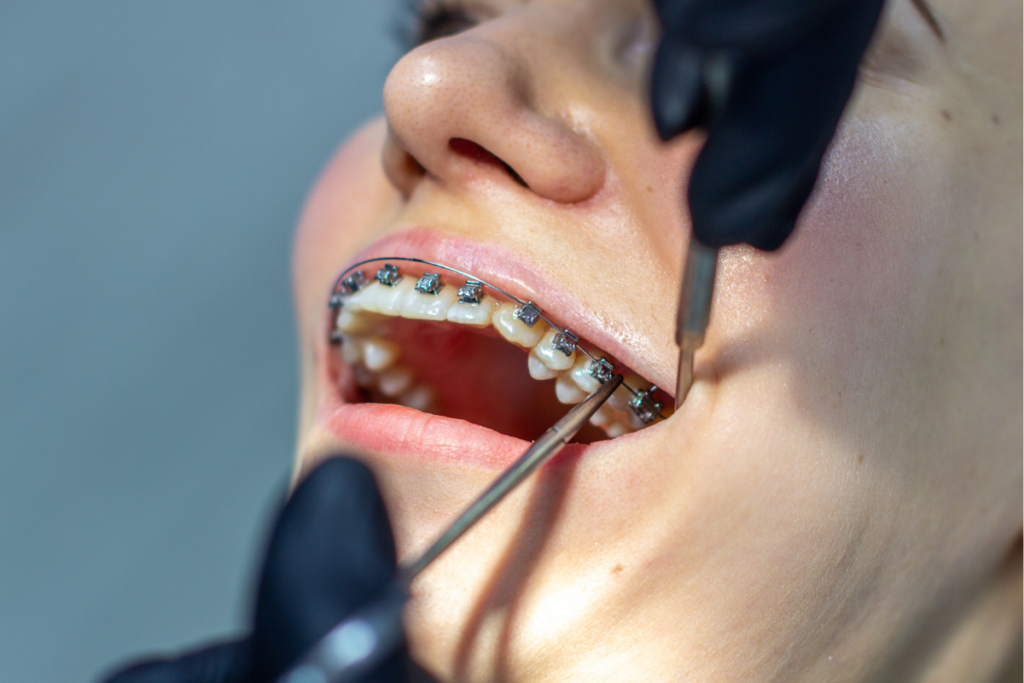
If your teeth feel wobbly after getting braces, take a breath. Slight looseness is normal, and it means your braces are working. Braces apply steady, gentle pressure that signals the bone and tissue around each tooth to reshape themselves, and while that happens, your teeth hold on a little less tightly. The feeling usually peaks for a day or two after an adjustment, then settles down. Below, you’ll find what’s going on under your gums, how long it lasts, and the signs that deserve a call to your orthodontist.
What Actually Makes Your Teeth Feel Loose With Braces?
Your teeth don’t sit directly in bone like posts in concrete. A thin layer of stretchy tissue called the periodontal ligament surrounds each root and acts like a cushion. When your braces push a tooth in a new direction, that ligament compresses on one side and stretches on the other.
Your body responds by breaking down a little bone where the tooth is heading and building new bone behind it. Specialized cells handle this remodeling, and the process is the entire reason braces can move teeth at all. During that rebuilding phase, the tooth has more give than usual. That’s the wiggle you notice.
Think of it like moving a fence post in soft soil. You loosen the ground in front, shift the post, and let the dirt pack back in. The post wobbles for a bit, then firms up in its new spot.
Is It Normal, and How Long Will It Last?
Yes, mild mobility is a normal part of treatment, and most patients notice it at certain points rather than all the time. Here’s the typical pattern:
- After you get braces: Teeth often feel tender and slightly loose for 3 to 5 days.
- After adjustments or new wires: Expect the feeling to return for 1 to 3 days.
- During treatment: Looseness comes and goes as different teeth move.
- After braces come off: Teeth tighten up over the following weeks and months as bone fully rebuilds around them.
Teeth that need to travel farther, such as crowded or rotated ones, tend to feel looser than teeth that barely move. Nothing is wrong with them. They’re just doing more work.
Your teeth will not fall out because of braces. When an orthodontist plans your treatment, the goal is to move teeth at a pace your bone can keep up with.
When Is Looseness a Red Flag?
Normal looseness feels subtle. You might notice a tooth shifts slightly when you press it with your tongue, or that chewing feels sore. Contact your orthodontist if you notice any of the following:
- A tooth that moves a lot, or moves when you bite down
- Looseness that keeps getting worse instead of improving after a few days
- Pain that lasts longer than a week
- Swollen, bleeding, or receding gums
- A bad taste, pus, or a pimple-like bump on the gums
- A loose tooth after a hit to the mouth
- A bracket, band, or wire that has come loose or poked into your gums
Several things can cause real problems. Gum disease is the biggest one, since plaque is harder to clean around brackets and inflamed gums weaken the support around teeth. Heavy force from skipped appointments, which can lead to sudden, larger adjustments later, can also add stress. Teeth grinding and injuries can play a role too. An exam, and sometimes dental X-rays, will show what’s happening, and most of these issues are very manageable when you catch them early.
What Can You Do to Feel Better and Protect Your Teeth?
You can’t speed up bone remodeling, but you can make the process more comfortable and keep your teeth safe while it happens.
- Eat softer foods for a few days after adjustments. Think pasta, eggs, yogurt, soup, mashed potatoes, and smoothies.
- Skip hard and sticky foods like nuts, hard candy, caramel, and crusty bread. They stress loose teeth and can break brackets.
- Rinse with warm salt water once or twice a day to calm sore gums.
- Take an over-the-counter pain reliever as directed on the label if you need it, and ask your orthodontist if you have questions about what’s safe for you.
- Brush gently but thoroughly after meals, and clean around every bracket. Floss daily with a floss threader or water flosser.
- Wear your elastics exactly as prescribed. Skipping them slows progress, which can lengthen your treatment.
- Keep every appointment. Regular visits let your orthodontist check how your teeth and gums are responding.
- Wear your retainer after treatment. It holds your teeth steady while the bone finishes strengthening around them.
Also, resist the urge to push or wiggle your teeth with your fingers or tongue. It won’t help them move faster, and it can irritate the tissue around them.
Worried About a Wobbly Tooth? Let’s Take a Look Together
Every smile moves at its own pace, and you shouldn’t have to guess whether what you feel is normal. If a tooth seems looser than it should, or you simply want peace of mind, our team at Eldorado Orthodontics is ready to check it out and walk you through what’s happening. Visit our dental clinic in McKinney, and we’ll examine your teeth, answer your questions, and make sure your treatment stays on track. Call us or book online today, and let’s keep your smile moving in the right direction, comfortably and confidently, right here in McKinney.
FAQs :
1. Can braces make a tooth fall out?
No. Braces move teeth through healthy bone remodeling. A tooth would only fall out if something else is going on, like advanced gum disease or serious trauma.
2. Why do my front teeth feel looser than the rest?
Front teeth have shorter, single roots, and they often move the most during treatment, so you tend to feel the change there first.
3. Do teeth feel loose with Invisalign too?
Yes. Any treatment that moves teeth causes some temporary mobility, whether you wear metal braces or clear aligners.
4. Will my teeth stay loose after my braces come off?
Not for long. Most teeth firm up within a few months, especially if you wear your retainer as directed.
5. Should I stop eating normally?
You don’t need to change everything. Just avoid hard, chewy, and sticky foods, and stick with softer choices on sore days.